kim yuna's 2010 olympic short program and james bond
"This is the small violence that enables the elegant movement."
-Belinda Huijuan Tang, Annotating Michelle Kwan’s “Fields of Gold” Performance, 2002 Winter Olympics1
cold open
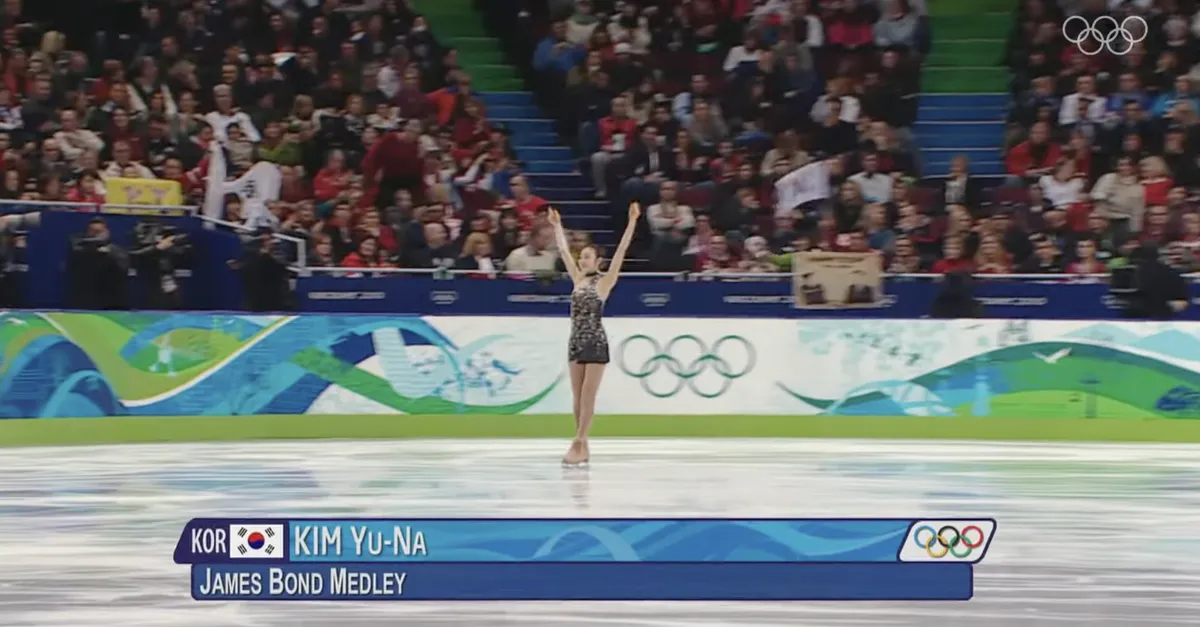
16 years ago today, 19-year-old korean skater kim yuna stepped onto the ice at pacific coliseum in vancouver. mere moments before that, 19-year-old japanese skater asada mao became the second woman ever to land a triple axel in olympic competition and completed the rest of her short program skate with the technical excellency for which she is rightly celebrated.
my mom started to cry as soon as the announcers said kim yuna's name. my mom grew up skating. she gets a bit shy so she doesn't really talk about it a lot, but i suspect she was quite good. even now, past the age of 50, i can see she feels comfortable on skates when we go to the temporary ice rinks that pop up in the suburbs near us in winter.
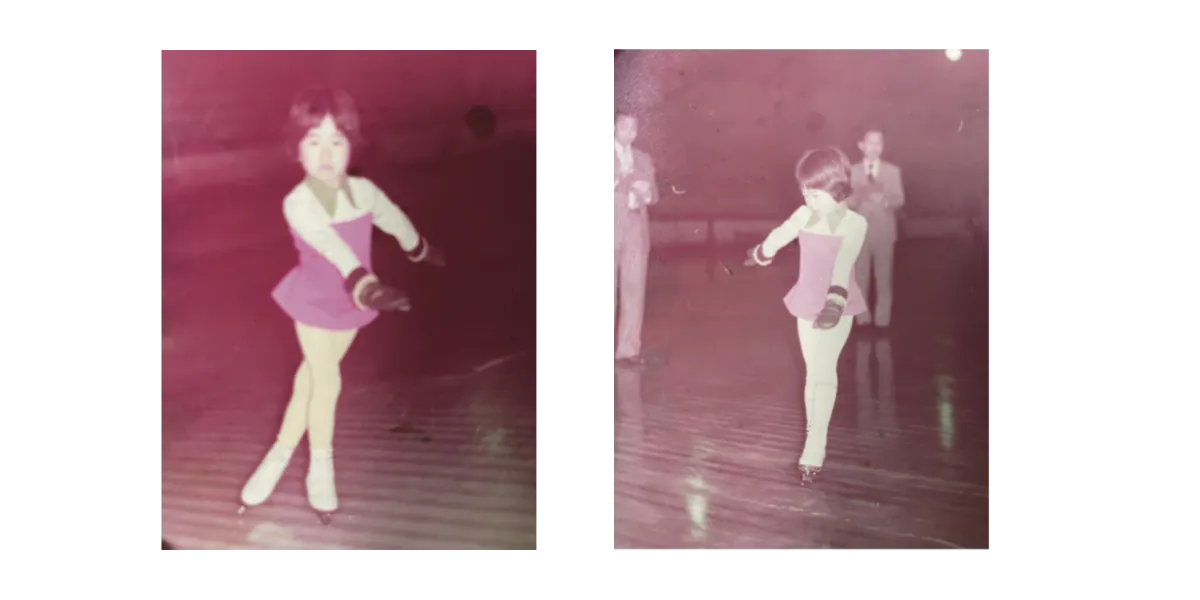
when my mother was a girl
in 2010, i wanted nothing to do with my mom because i thought i had nothing in common with her. i'll be honest, i even rolled my eyes (internally) when i saw her crying--the music hadn't even started yet, she hadn't done anything!
"Fight on the Disco Vilante" from Thunderball (1965)
yuna's outfit was perfect. the black with silver and gold accents felt so very james bond to me, having seen only daniel craig's interpretation of the character until that point. she looked like she had come right out of the casino or fancy charity gala. Her signature crown earrings glinting in her close up also felt very anglican (those earrings sold out in minutes in korea).
when the music starts, her arms move so languidly, all stealth and finesse. as she skates towards her first jumps, I'm struck by how quickly she moves across the rink, made more apparent by the stock stillness of the crowd behind her. then that first jumping pass. Anyone who has watched figure skating intently has felt it--the suspension of time when they're in the air, the bated breath, the moment of ecstasy before they land.
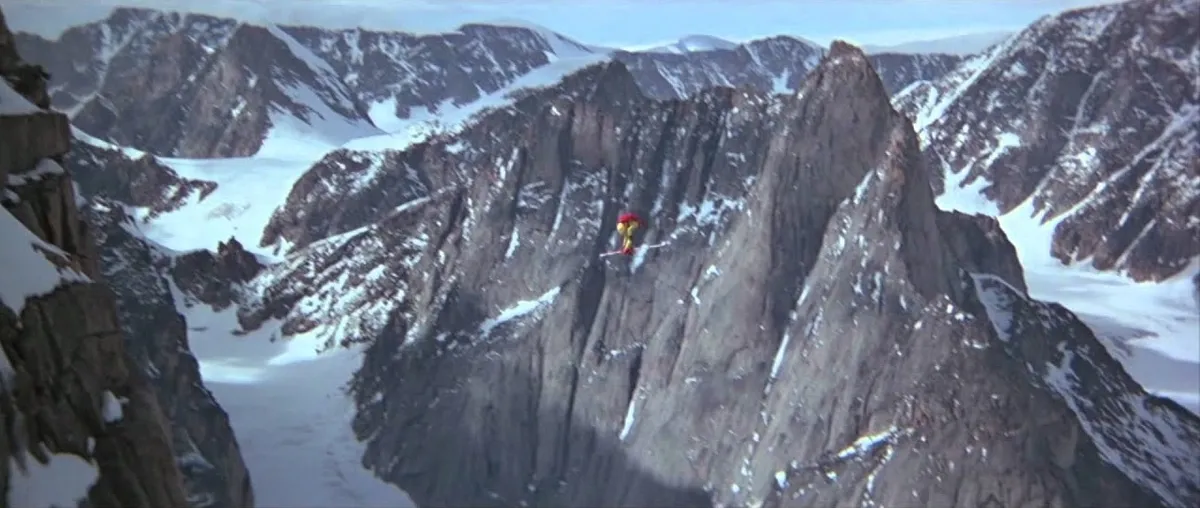
still from "The Spy Who Loved Me" (1977)
this year, a and i began to watch all 25 of the eon-produced james bond movies in release order because netflix has just put them all up for streaming. and while there are many things my lizard brain enjoys about the films (their silliness, their running gags, their fake sound effects elicited by punching), a different part of my brain will jump start any time there is an asian person on the screen. i have to quiet her, which i am good at because i've had a lot of opportunities to practice. i tell her to sit back down, it was a different time, and right now, we just want to enjoy the movie.
"Girl Trouble" from From Russia with Love (1963)
from the first minute of her performance, it's clear that kim yuna is an athlete who skates with interpretation in mind. She feels the music--her expressions and the way she moves tell a story. this sort of elusive, kind of ethereal quality is, in skating terms, called "artistry." This and "technical precision" make up the two categories by which performances are judged. commentators that year often remarked on how kim yuna was an artistic skater and asada mao was a technical one.
this perceived difference in skating styles of course was added fuel to the rivalry between the two--not that it needed it. everyone around me was talking about figure skating that year--at the taekwondo studio, at the grocery story, and at the korean clothing shops my mom frequented. when people talked about kim yuna, their faces would shine as if they themselves were olympic hopefuls. and eventually the conversation would turn to mao. people would frown, criticize the high-risk, high-reward strategy of trying to land the high-point value triple axel as a classic example of "japanese trickery". these were people my mom's age and older, not yet born during the occupation, but old enough to feel its shadow, hear about it from their parents and grandparents.
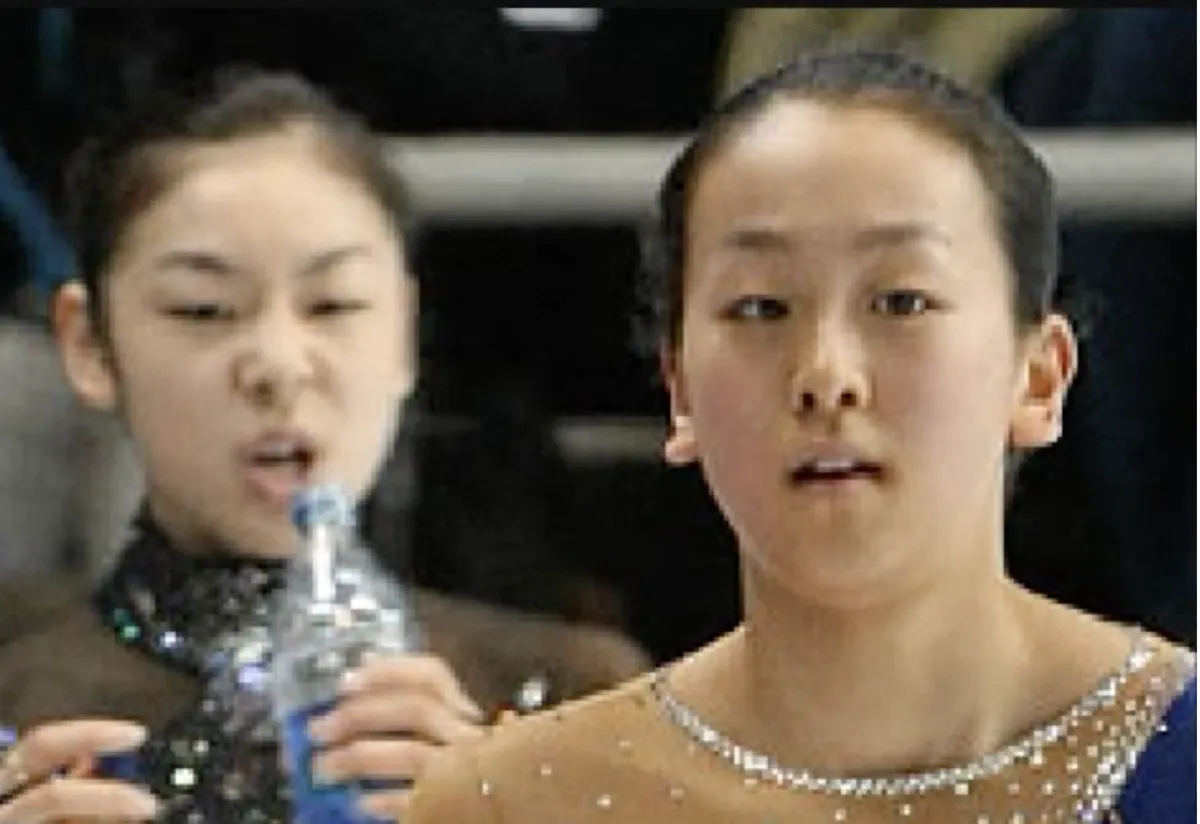
still from a youtube video titled "Yuna Kim is hated by other figure skaters"
in james bond, the threat is almost always foreign. in fact, we're up to the 1989 now in our viewing, seventeen movies in, and there has yet to be a real "homegrown" threat to england. and of course, in some ways it makes sense. would british people go see a movie where they're the ultimate bad guys? would they be able to shoot in such faraway locations if the villain was some guy in shoreditch? still, the one-dimensional portraits of asian people are grating. the snake charmers, the subservient women, the generalized "asian-ness" (if james bond were watching these performances, the nuances of their rivalry would be lost on him to the idea that "they're both oriental"), the movie where bond has to "become japanese" !! ugh.
"Hate how people try to call it racist today! Ridiculous! Bond honored the Japanese and Chinese in this film!"
-a reddit commenter on their love for "You Only Live Twice"
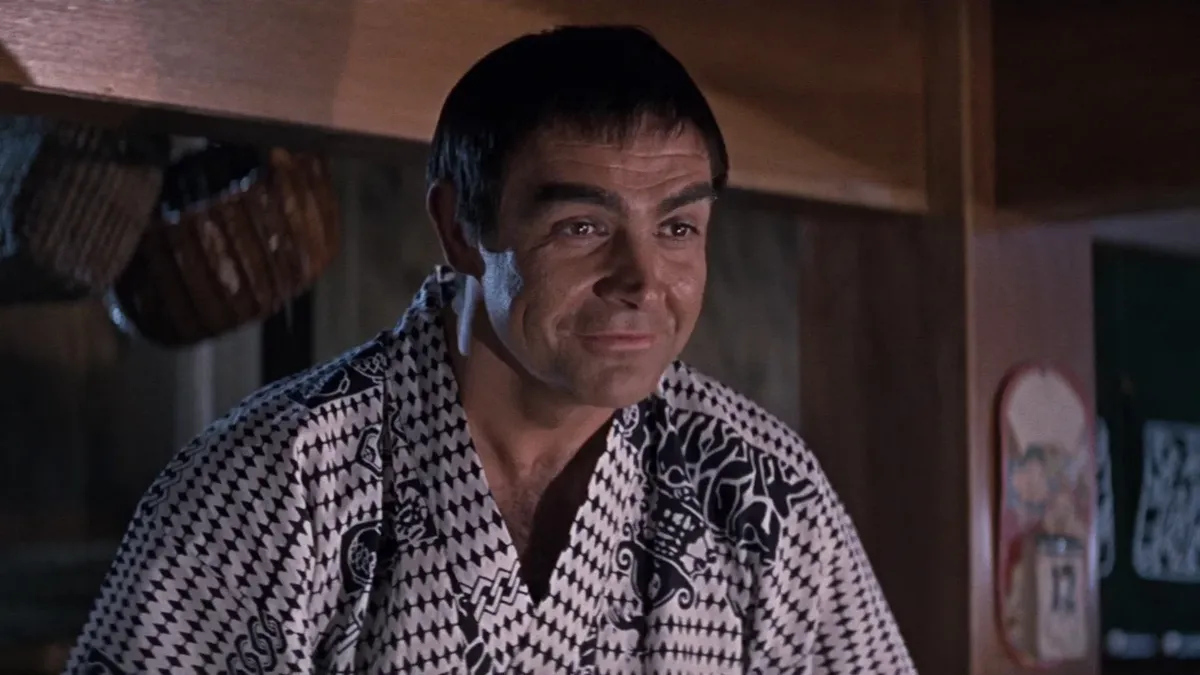
still from "You Only Live Twice"
"Going Down Together" from Die Another Day (2002)
i remember conversations with my friends earlier that year about how we hated the japanese skaters. I think one of my friends even assigned a special spot in hell for miki ando. we were reading dante's inferno and had to create a "punishment that fits the crime" to prove we understood contrapasso. in my memory, this was an inflation of some incident when she crashed into other skaters during a warm up.
i am amazed at how kim yuna can change her expression from so genuinely triumphant to slick and sly at the turn of the music. she holsters a finger gun against her thigh, a kind of playfulness one expects from a teenager.
they're all just teenagers.
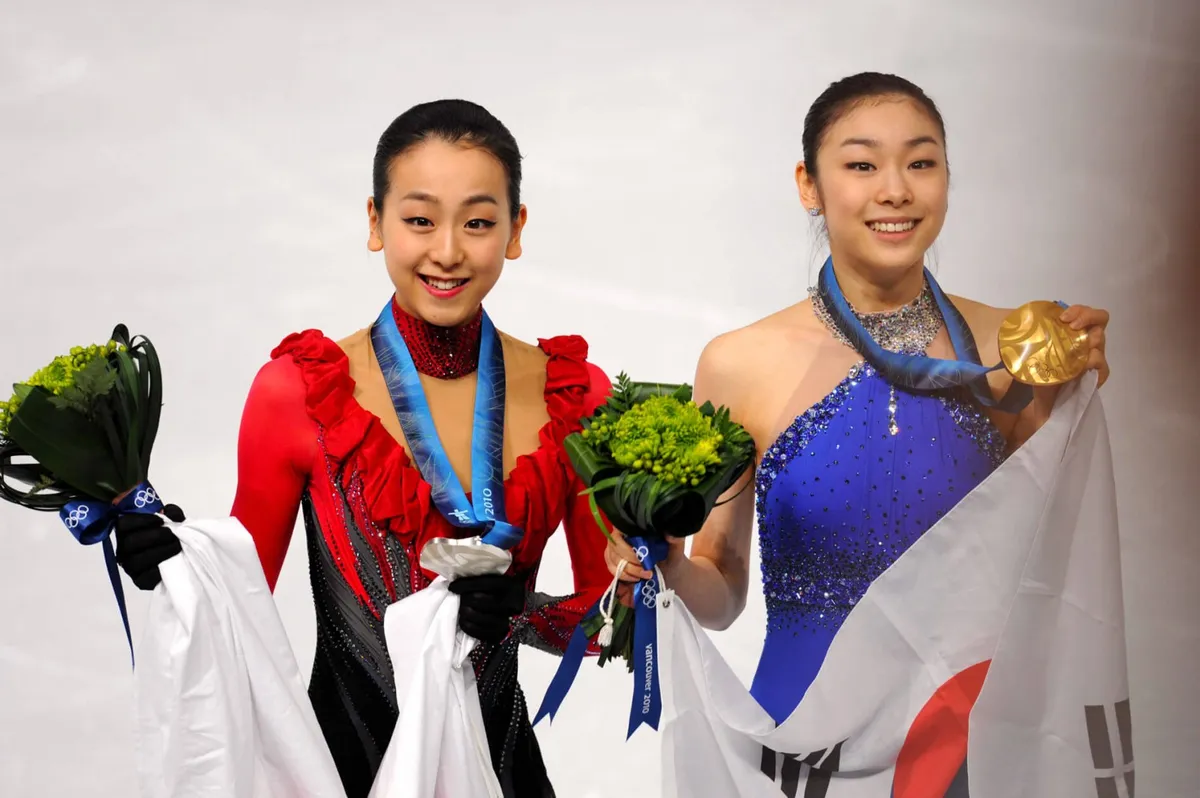
how could we have hated them?
in die another day, james bond infiltrates a military base in north korea, where his target is colonel tan-sun moon and henchman, zao. moon later undergoes surgery to become "gustav graves." also, moon's father, "general moon" is played by a hong kong actor. the thing i always dislike about this genre of movies, is that while the main character is free to wreak havoc and destroy buildings all over the world, these violences are treated as collateral damage and not devastating acts of terrorism. it is always us versus them. the way bond galavants across the world with devastation in his wake in the name of queen and country, implies the british are the only people with buildings worth preserving, people worth saving. because ultimately, james bond is a machine of the state, he turns its dreams into reality.
"James Bond Theme" from Dr. No (1962)
it is at this point during her step sequence that i begin crying too. i can't help myself. even today, it makes me emotional. the whole time i watched i was thinking to myself, is this music from james bond? I don't know that I've ever heard it before. And then suddenly that iconic guitar-line begins. she spins so quickly, her outfit catching the light with each different angle. the performance ends on a classic bond-like silhouette, finger gun pointed at the crowd then shot, the recoil bringing her arms to her side, fingers together, pointed up.
i am sure my family was not at all unique in gathering around the television for kim yuna's olympic debut like white families do when there's a rocket launch. For many, especially for young korean girls, i believe that night in february of 2010 was a shared experience--five minutes of awe and pride that has since calcified into nostalgia. this was pre-bts, pre-parasite oscar, pre-kpop demon hunters, there weren't a lot of opportunities to see a korean person on our televisions, and fewer opportunities to see more than one asian person on television at once.
in the very first of these movies, the titular Dr. No is of German-Chinese descent. His plan is simple, disrupt the space shuttle launch at cape canaveral using a radio beam. he wants to do this as a show of power. after being rejected by both the united states and soviet governments, he wants to turn the cold war hot. also, he has prosthetic hands. he's a pretty classic mad scientist 2. this is how the cinematic legacy of james bond begins.
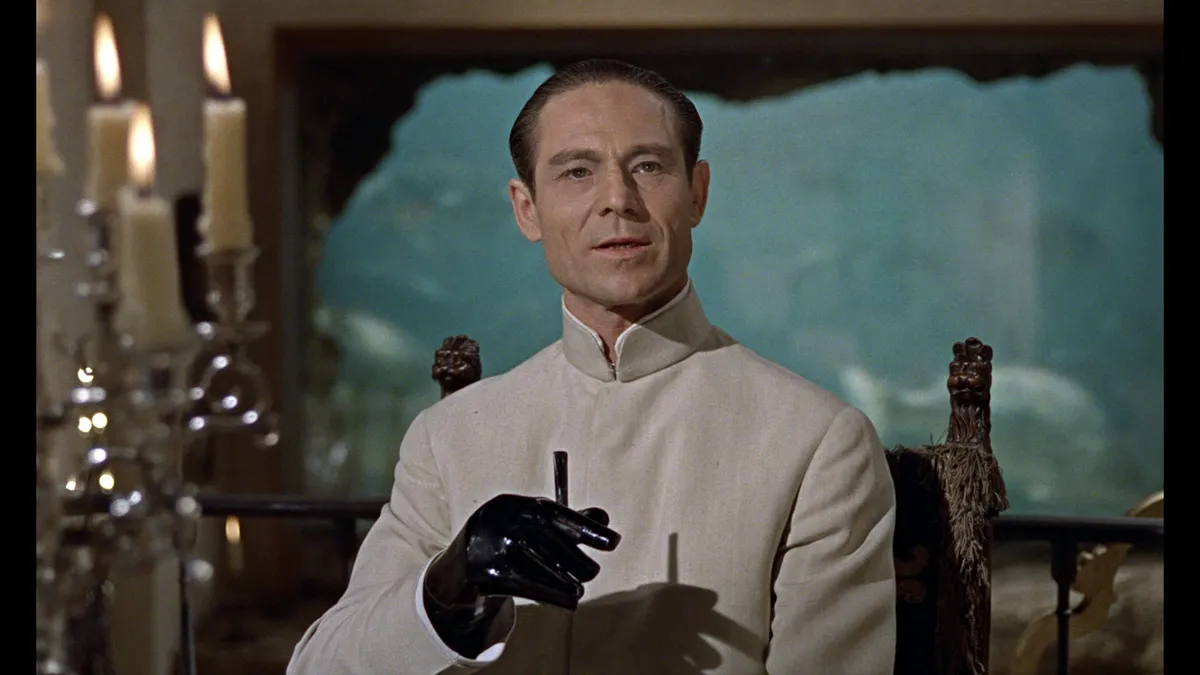
still from "Dr. No"
the score
as the crowd behind her bursts with taegukgis, as she skates towards her coach, and sits at the bench, my mom and i are just sobbing. she reached her season's best. and she finished her short program firmly in first place. within the next week, she will skate her record-breaking long program and win the gold medal. my mom and i will both cry then too. and again when they do the podium. and again every single time we watch the video.
the most recent james bond movie was directed by the child of a japanese-american. and the film subverts the "oriental other" trope by having the villain, played by rami malek, be a kind of colonizer of japanese aesthetic. The film itself is very divisive for reasons i will not spoil today.
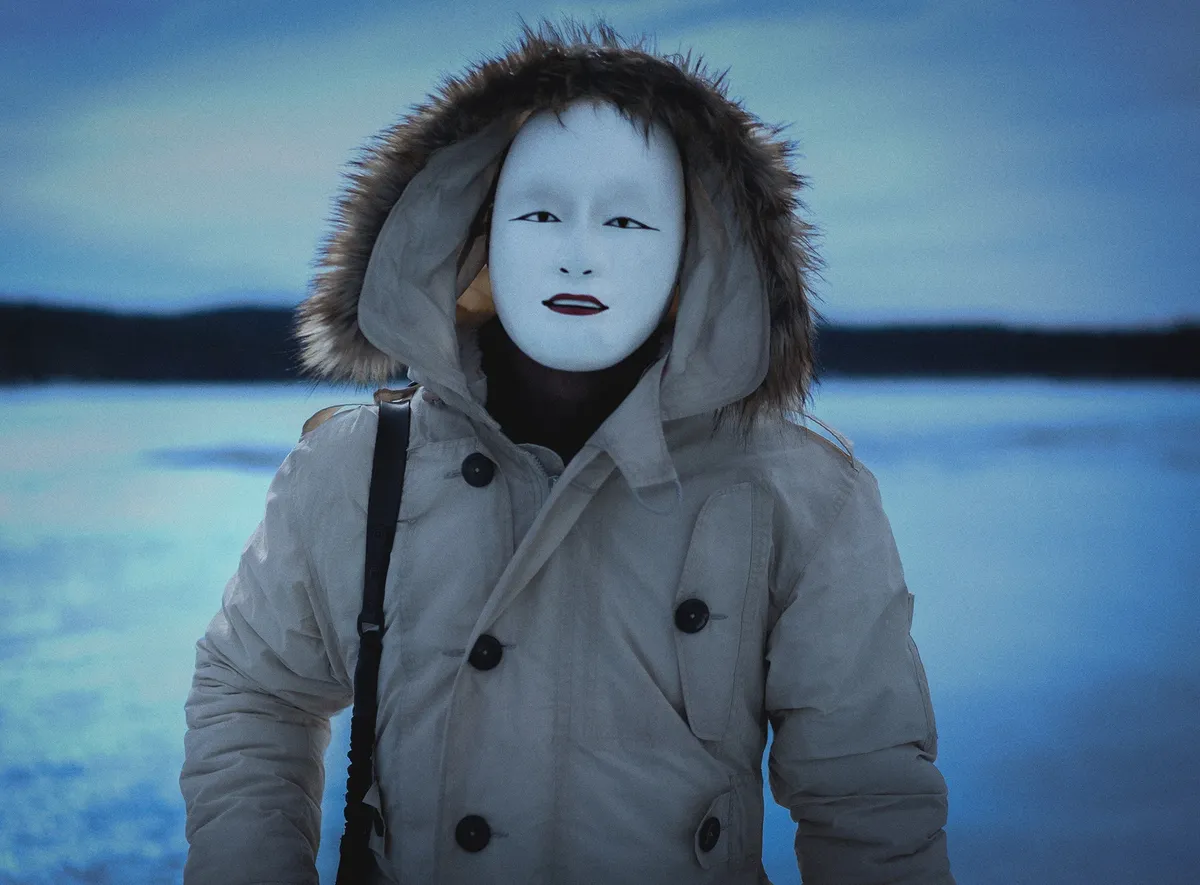
still of Rami Malek in a Noh Mask in No Time to Die
The repetition of homonyms of "No" seem almost too overt in calling out Dr. No. regardless of what you think of the movie, it's clear to me the director is grappling with the tradition that he is inheriting. What happens when a weapon of the state is estranged from the state that entitled him in the first place? what do we inherit from the violence of our forefathers? and from their suffering? what do we lose when we tell their stories? when we hold their hate, their love, their desire as if it were our own?
"It hurts to be something, it's worse to be nothing with you" (from "Promise" by Laufey)
this year, alysa liu won the gold medal for women's single figure skating. i'm sure you've all seen the videos, the instagram posts, the articles of her long program and her exhibition stage. but it bears repeating that it is truly something else to see such unbridled joy in the midst of a competition that athletes, and yes even countries, use to define themselves. all her wins this season and the olympic gold medal came after a long time away from the rink. she retired from skating at 16, shortly after the 2022 olympics, where she placed 7th. she was a teenage girl who just wanted to be a teenage girl. and when she returned to the ice, she did it on her own terms and because she wanted to.
At the olympics this year she performed her short program to "promise" by icelandic-chinese artist, laufey. when asked she has said repeatedly, she is not here to win, she is here to show us her story, her art, her creative process. watching alysa liu skate, it is clear she is not skating for america, she is skating for herself. her score after the short left her in third place.
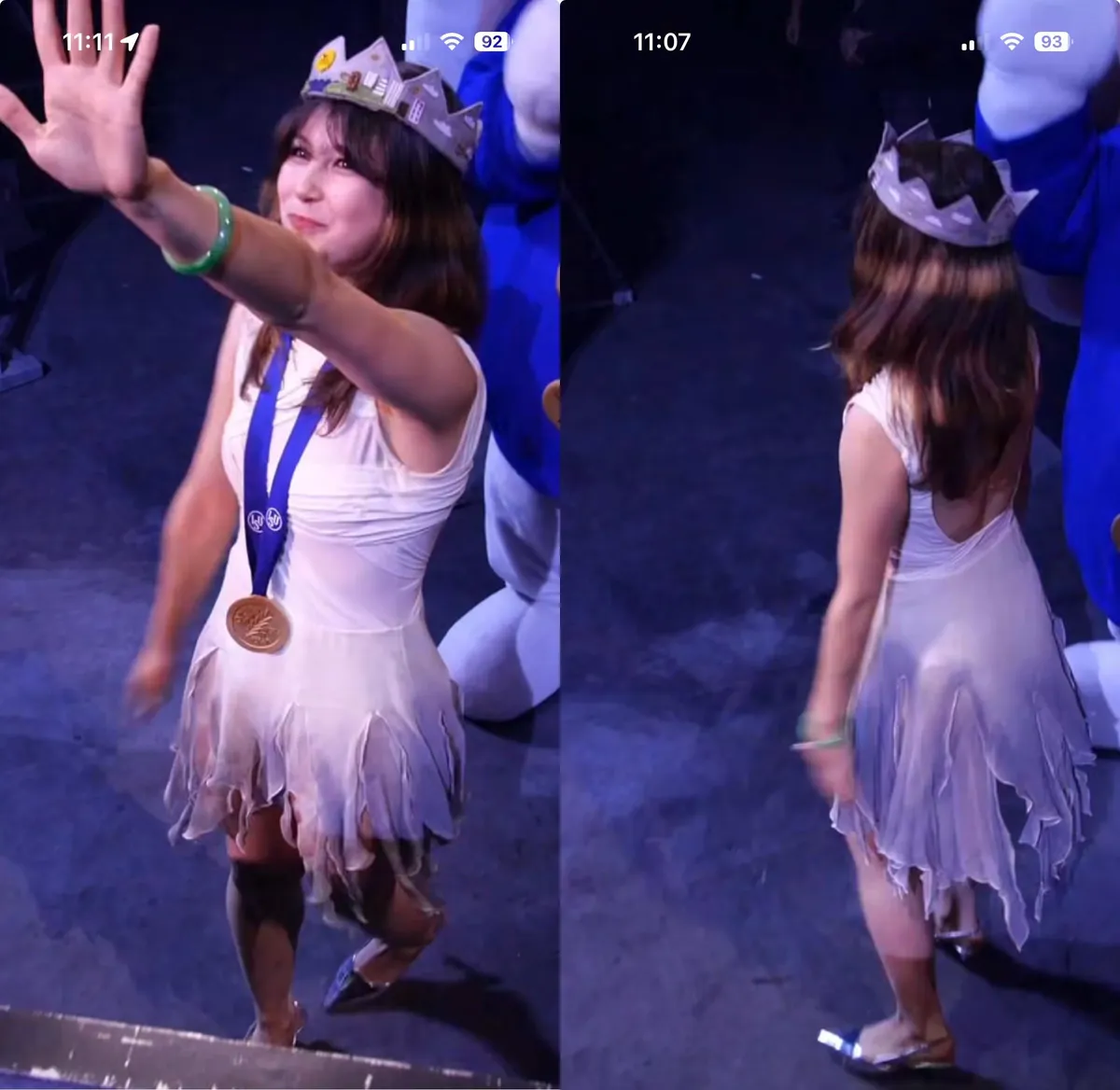
alysa liu at laufey's show
when they announce her score for the short, she is nothing but smiles.
i met belinda years ago when we were two of very few writers of color in a writing program. i rarely got to read her work then because we were in different genres, but we are all lucky because since then, her writing has become available for all to read.↩
the movie gives us this and not much else. but the book version dr. no goes harder on the orientalism and yellow peril. he wears a kimono, joins a chinese crime syndicate, and his heart is on the right side of his body.↩